Tenant isolation
The internal Workspace is the tenant boundary shown to customers as an Organization. Files, usage, subscription state, entitlements, members, notifications, audit, credentials, and lifecycle records are organization-bound.
Security · Organizations and tenancy
Context resolution
WorkspaceContextResolver returns the organization, active membership, and acting user.
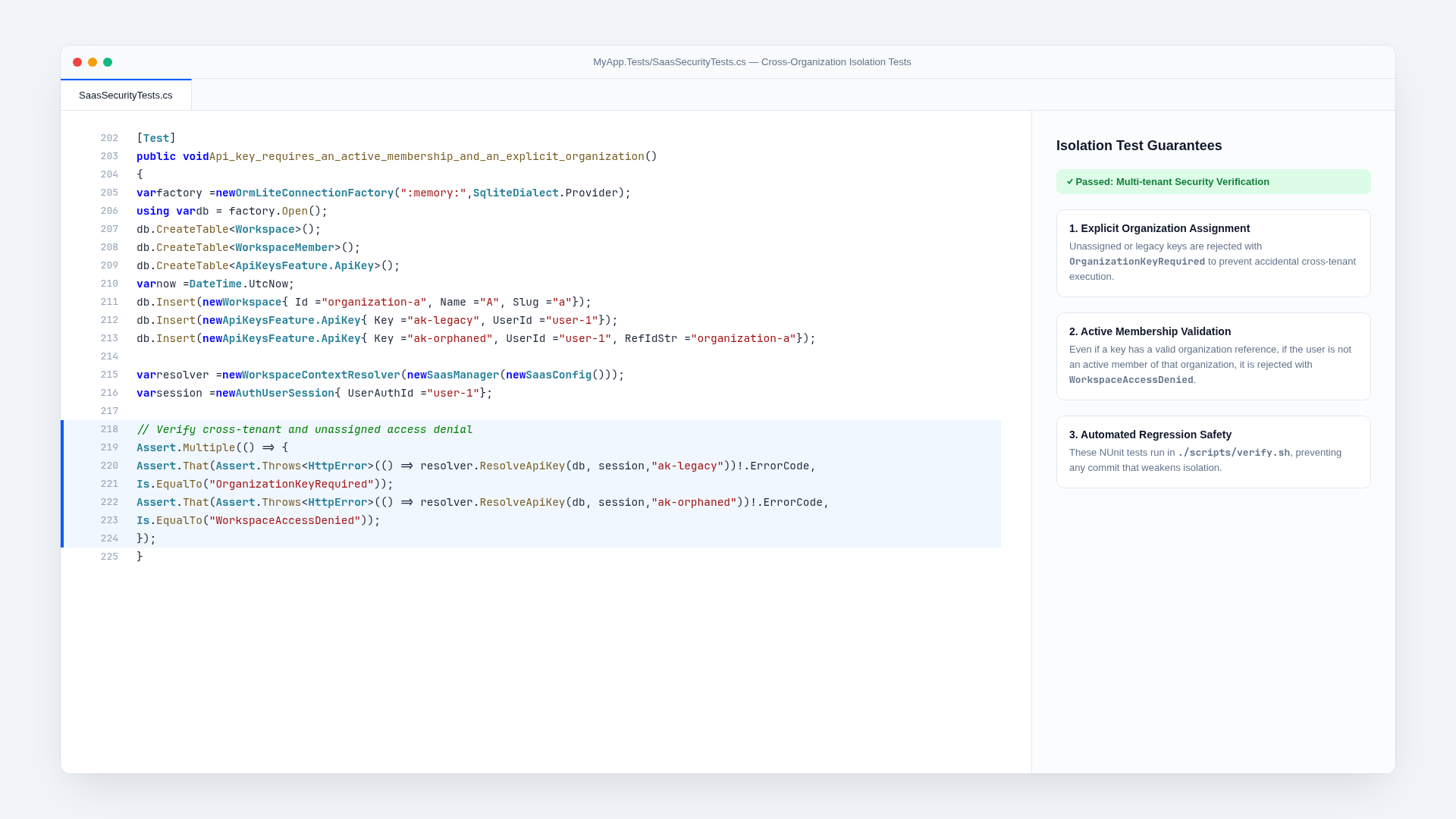
For an interactive cookie session it resolves the active UserWorkspacePreference, verifies an active membership, and loads a non-deleted organization. For API-key requests it ignores browser preference and resolves the organization stored on that credential, then verifies the key owner still has active membership.
Never accept a customer-provided WorkspaceId as authorization. IDs in routes and payloads identify candidate resources only after the caller's tenant context is known.
Query pattern
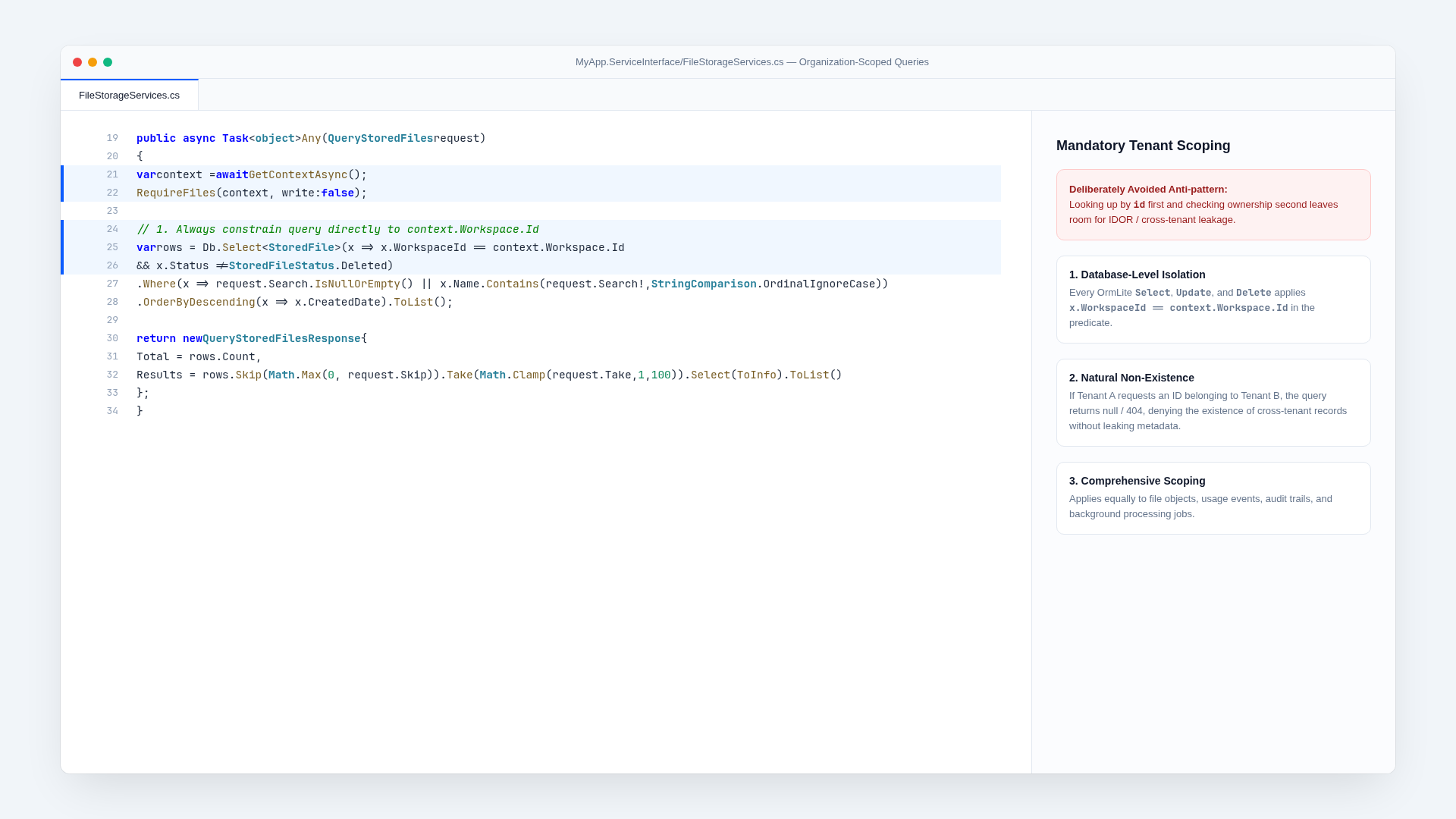
Customer-resource queries include the tenant predicate:
var widget = Db.Single<Widget>(x =>
    x.Id == request.Id &&
    x.WorkspaceId == context.Workspace.Id)
    ?? throw new HttpError(404, "WidgetNotFound", "The widget was not found.");
Return 404 for inaccessible resource IDs where distinguishing “exists elsewhere” would leak tenant information. Include indexed WorkspaceId on tenant-owned tables and use composite unique constraints for organization-scoped business keys.
Storage, jobs, and analytics
- File object keys are opaque and metadata is tenant-bound; physical paths are never accepted from users.
- Background-job payloads use durable identifiers, then re-read and revalidate organization state.
- Usage idempotency keys are unique within an organization.
- Analytics dimensions are controlled by meter configuration and do not create cross-tenant groupings.
- Exports and downloads verify tenant ownership again when retrieved.
Platform access
Customer 360 is an explicit platform path with capability filtering and redacted projections. Support access is time-bound to one operator and one organization. Do not reuse platform queries in customer APIs or expose full persistence models when a redacted projection exists.
Testing strategy
For every new tenant-owned resource:
- create organizations A and B;
- give one user different roles in each;
- create resources with overlapping names/business keys;
- attempt list, read, update, delete, export, job, and API-key access across tenants;
- test inactive membership and deleted/suspended organization state;
- inspect error bodies, timing, audit, and logs for information leakage.
Related documentation
Authorization and roles
Next SaaS separates customer organization permissions from platform operator permissions. A role in one system never implies a role in the other.
API credentials and abuse controls
ServiceStack ApiKeysFeature supplies credentials; SaaS filters bind their lifecycle and access to the active organization.