Add a meter and quota
A meter is the single measurement shared by quota enforcement, customer analytics, and operator diagnostics.
Development recipes · Usage and quotas
1. Choose the semantics
Select the behavior before writing code:
| Choice | Use when |
|---|---|
Counter | accepted units accumulate, such as API requests |
Gauge | current quantity can rise and fall, such as bytes stored |
ReservableCounter | admission happens before fallible work, such as an upload |
BillingPeriod | paid usage resets with projected Stripe boundaries |
CalendarMonth | usage resets monthly in UTC |
Never | lifetime/current state does not periodically reset |
Choose Sum, Current, or Maximum aggregation to match the commercial promise.
2. Register the meter
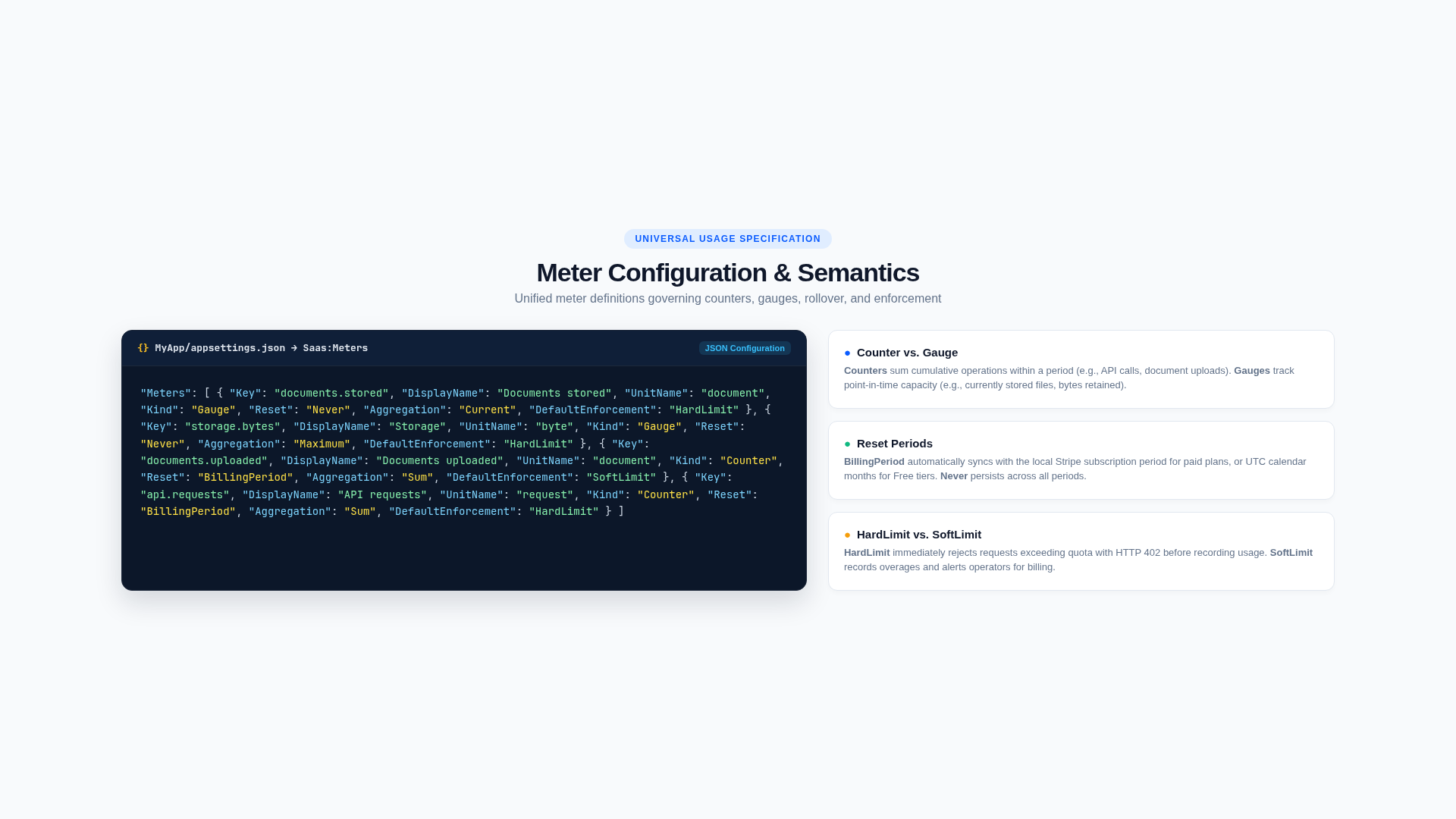
Add it to Saas.Meters in MyApp/appsettings.json:
{
  "Key": "widgets.created",
  "DisplayName": "Widgets created",
  "UnitName": "widget",
  "DefaultEnforcement": "HardLimit",
  "Kind": "Counter",
  "Reset": "BillingPeriod",
  "Aggregation": "Sum",
  "AllowCustomerBreakdown": true,
  "AllowUserBreakdown": true
}
Keys and semantics are durable. Changing what an existing meter means corrupts historical interpretation; add a new key instead.
3. Add plan allowances
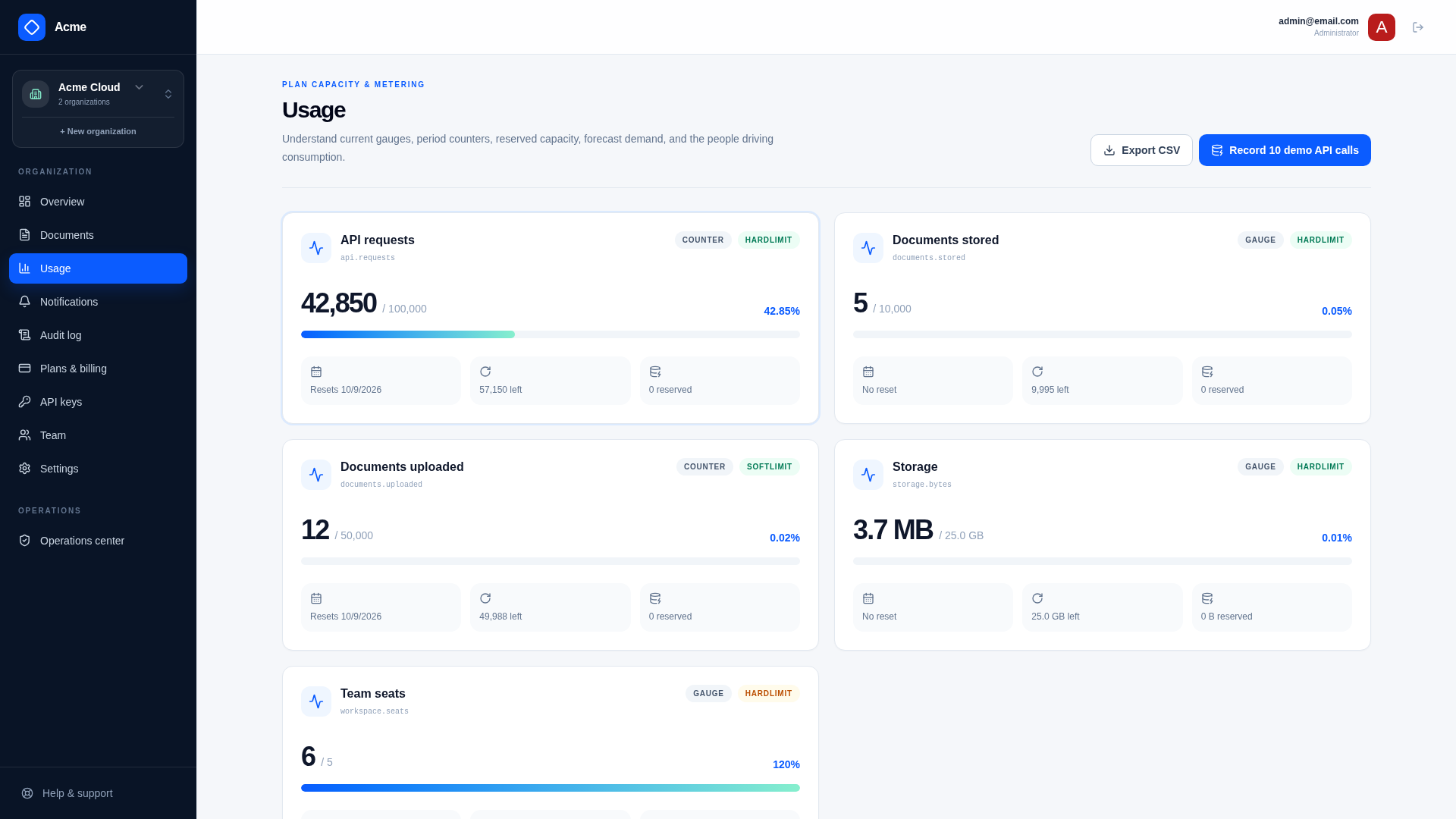
Add the meter and included units to empty-state plans.json, or edit and publish plan drafts from the Plans tab at /admin/plans. null allowance means unlimited. Choose HardLimit, SoftLimit, or TrackOnly deliberately.
4. Record simple accepted work
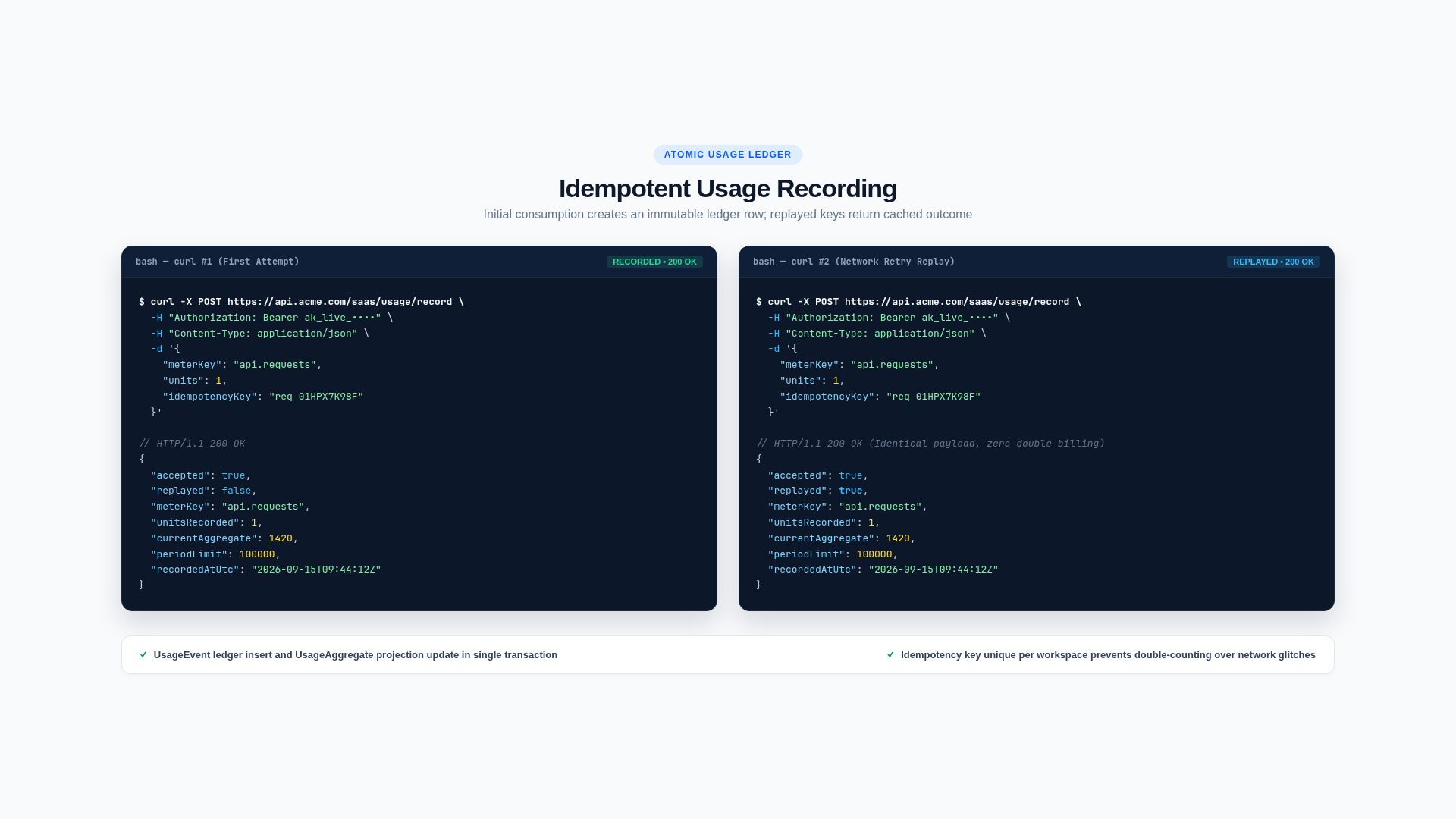
For a single transactional operation, call ISaasManager.RecordUsage with organization, subscription, actor, positive units, and a stable idempotency key. Record only after the product mutation can commit consistently, and use the same database transaction when possible.
The public example endpoint is POST /saas/usage, protected by api.access.
5. Reserve fallible work
For uploads or provider work that may fail after admission:
var reservation = manager.ReserveUsage(
    Db, workspace, subscription, userId,
    "widgets.created", units, operationId);

try
{
    var actualUnits = await PerformWorkAsync();
    manager.SettleUsage(Db, workspace, subscription, userId,
        reservation.Id, actualUnits);
}
catch
{
    manager.ReleaseUsage(Db, workspace, subscription, userId,
        reservation.Id);
    throw;
}
Expired pending reservations are released by a recurring job. Reuse the original business-operation key on retries.
6. Verify policy edges
Always test first acceptance, idempotent replay, exact limit, over-limit rejection, unlimited allowance, soft/track-only behavior, override precedence, period rollover, reservation settle/release/expiry, and concurrent admission. Add PostgreSQL concurrency coverage when changing the aggregate algorithm.