Database migrations
Next SaaS uses EF Core for ASP.NET Core Identity and ServiceStack OrmLite migrations for SaaS product data. Both use the configured database.
Development recipes · Architecture
Product schema with OrmLite
Product entities live in MyApp.ServiceModel; numbered migrations live in MyApp/Migrations and inherit MigrationBase.
public class Migration1002 : MigrationBase
{
    public override void Up()
    {
        Db.CreateTable<Widget>();
    }

    public override void Down()
    {
        Db.DropTable<Widget>();
    }
}
Use a new migration number in any derived application whose database has been shared, deployed, or contains data that matters. Keep Up and Down deterministic and avoid network/provider calls.
During active template development, the repository intentionally supports reshaping Migration1001 and recreating SQLite from empty state. That shortcut must not carry into a shipped customer application.
Identity schema with EF Core
ApplicationDbContext owns users, roles, logins, and Identity tokens. Use EF migrations for Identity model changes. Do not map SaaS product entities into EF merely because Identity already uses it.
SQLite uses checked-in EF migrations when present. PostgreSQL currently bootstraps Identity from the current model with EnsureCreated, matching the template's clean-state development policy. A production-derived product should adopt a deliberate EF migration strategy before preserving PostgreSQL data across model changes.
Run and inspect
cd MyApp
npm run migrate

# Development-only OrmLite helpers
npm run revert:last
npm run rerun:last
An empty database also bootstraps automatically when Database.AutoMigrateEmpty is enabled.
For a complete local reset:
ASPNETCORE_ENVIRONMENT=Development ./scripts/reset-dev.sh --yesThis deletes the local SQLite database and local file store, then recreates users, roles, plans, and product tables. It is intentionally guarded and destructive.
Data and seed rules
MyApp/plans.jsonis an empty-state catalog seed, not ongoing catalog synchronization.- Use migrations for deterministic reference data required by code.
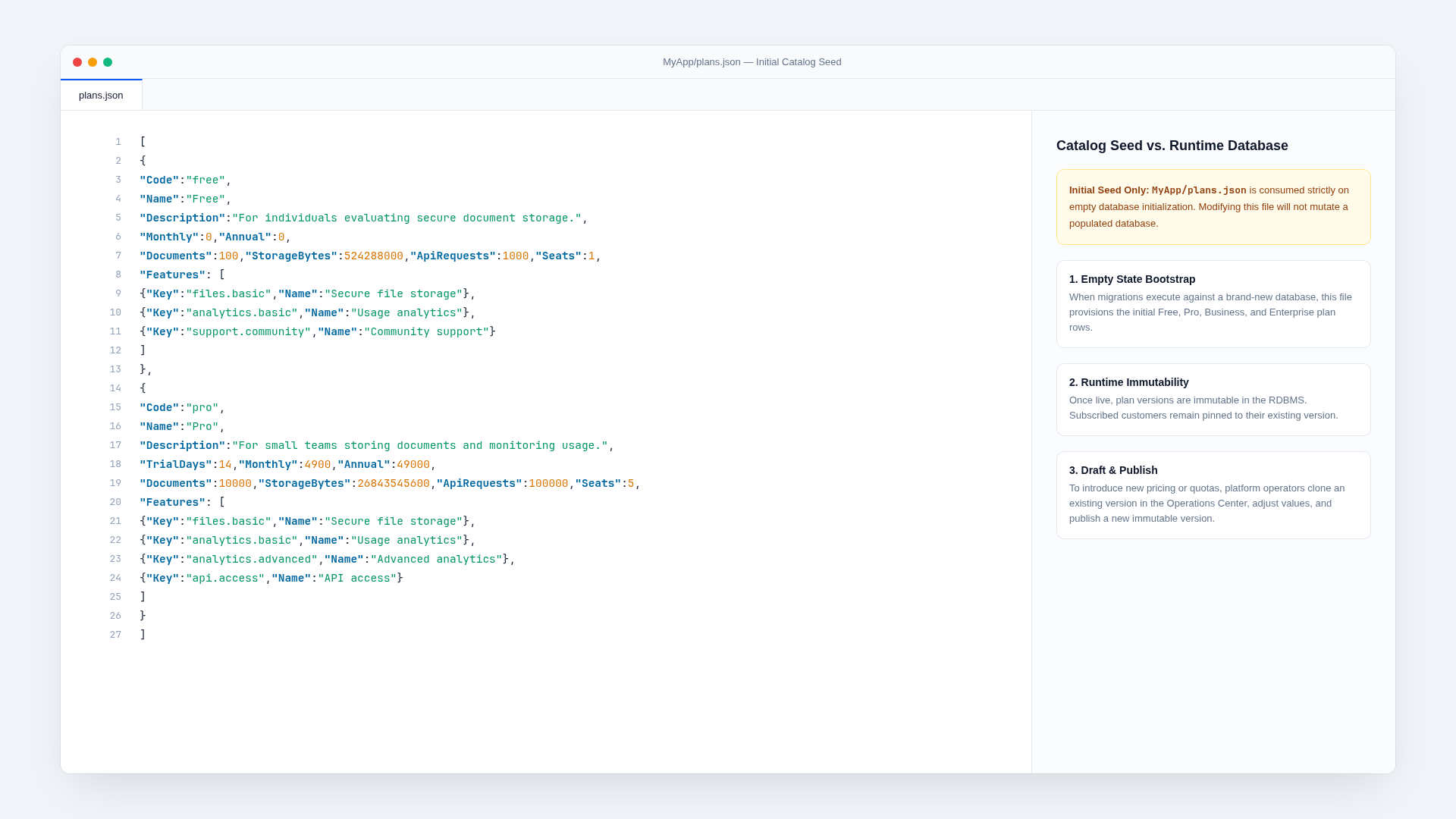
- Use the Admin draft/publish workflow for normal commercial plan changes.
- Give tenant tables indexed
WorkspaceIdfields and enforce business uniqueness in the database. - Test SQLite and PostgreSQL-specific behavior when changing concurrency, constraints, or SQL.
Verify
Run migrations on an empty database and a database at the prior version, inspect constraints/indexes, run Down only in disposable development state, and execute ./scripts/verify.sh. Its final gate starts production mode against a fresh temporary database and confirms reference tables and plans exist.
Related documentation
Add a background job
Use ServiceStack Background Jobs for work that is slow, retryable, scheduled, or should survive the initiating request.
Add a frontend page
Authenticated product pages are client-rendered React routes that call typed ServiceStack APIs and remain compatible with Next.js static export.